ADVERTORIAL

Ground Breaking Scientific Discovery:
"The Brain Power You Want is not in a bottle, capsule or magic lamp...
It's In Your Brain Right Now"
Top Scientist found 98% of people are born with genius abilities, thanks to the Theta brainwave, which we call the Genius Wave.
But our modern way of life supresses this "genius wave" in us.
The Genius Wave fixes that fast, using proven soundwave technology.
Just kick back, listen to the special Genius Wave audio for just7 minutes a day and watch the success pour in.
The Top 3 Science-Based Ways to Improve Brain Function
MEDITATION
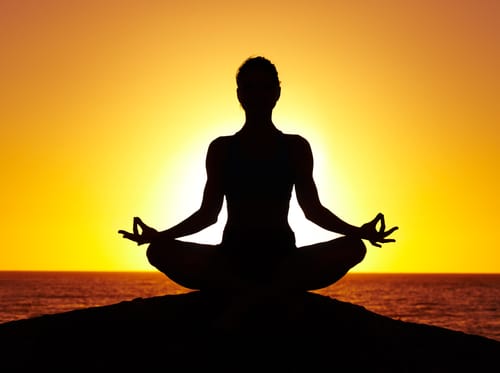
Meditating 2x a day for 20 mins has been shown to activate the Theta Wave
This is very time-consuming and it often feels like you are doing it wrong
BIOFEEDBACK
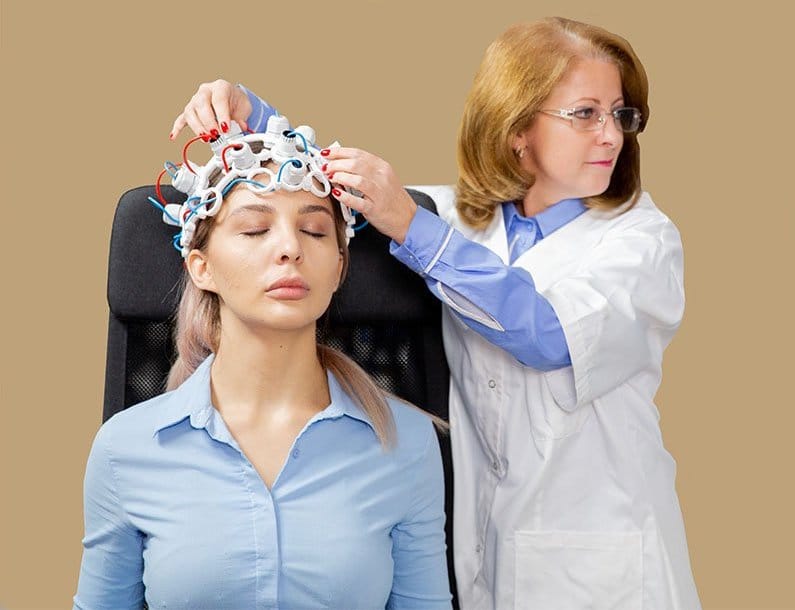
A biofeedback machine has shown to improve Brain Theta Wave function
However, Individual sessions are usually around $300 each. At home machine will cost you around $7000
AT HOME AUDIO

This is the easiest and cheapest method by far
Simply listen to this 7 minute audio everyday to activate the Brain Theta Pathways.
See the link to the audio below
Copyright 2024– All Rights Reserved
Disclaimer: All information provided is for educational use only. Always consult with your doctor or primary care physician prior to starting any new health or fitness routine.
SCIENTIFIC REFERENCES
1.
Venkatraman, R.. You're 96 Percent Less Creative Than You Were as a Child. Here's How to Reverse That. Inc.com.https://www.inc.com/rohini-venkatraman/4-ways-to-get-back-creativity-you-had-as-a-kid.html
2.
Kerley, J. Creative Inventive Design and Research.https://ntrs.nasa.gov/api/citations/19940029213/downloads/19940029213.pdf
3.
Robinson, K. “Do Schools Kill Creativity?”.https://www.youtube.com/watch?v=iG9CE55wbtY
4.
Uable, 28 August 2023. “The end of education.”https://medium.com/@connect_75384/the-end-of-education-94f3a39fe97c
5.
Church, D., Yang, A., Fannin, J., & Blickheuser, K. (2022). The biological dimensions of transcendent states: A randomized controlled trial. Frontiers in Psychology, 13, 928123.https://doi.org/10.3389/fpsyg.2022.928123
6.
Herrmann, C. S., Strüber, D., Helfrich, R. F., & Engel, A. K. (2016). EEG oscillations: From correlation to causality. International Journal of Psychophysiology, 103, 12-21.https://doi.org/10.1016/j.ijpsycho.2015.02.003
7.
Poe, G. R. (2017). Sleep Is for Forgetting. Journal of Neuroscience, 37(3), 464-473.https://doi.org/10.1523/JNEUROSCI.0820-16.2017
8.
Crivelli-Decker, J., Hsieh, L.-T., Clarke, A., & Ranganath, C. (Year). Theta oscillations promote temporal sequence learning. Neurobiology of Learning and Memory, Volume Number(Page Numbers).https://doi.org/10.1016/j.nlm.2018.05.001
9.
Zielinski, M. C., Tang, W., & Jadhav, S. P. (2020). The role of replay and theta sequences in mediating hippocampal-prefrontal interactions for memory and cognition. Hippocampus, 30(1), 60-72.https://doi.org/10.1002/hipo.22821
10.
Henao, D., Navarrete, M., Valderrama, M., & Le Van Quyen, M. (2020). Entrainment and synchronization of brain oscillations to auditory stimulations. Neuroscience Research, 156, 271-278.https://doi.org/10.1016/j.neures.2020.03.004
11.
Hanslmayr, S., Axmacher, N., & Inman, C. S. (2019). Modulating human memory via entrainment of brain oscillations. Trends in Neurosciences, 42(7), 485-499.https://doi.org/10.1016/j.tins.2019.04.004
12.
Michael, E., Santamaria Covarrubias, L., Leong, V., & Kourtzi, Z. (2023). Learning at your brain's rhythm: individualized entrainment boosts learning for perceptual decisions. Cerebral Cortex, 33(9), 5382-5394.https://doi.org/10.1093/cercor/bhac426
13.
Trost, W., Frühholz, S., Schön, D., Labbé, C., Pichon, S., Grandjean, D., & Vuilleumier, P. (2014). Getting the beat: entrainment of brain activity by musical rhythm and pleasantness. NeuroImage, 103, 55-64.https://doi.org/10.1016/j.neuroimage.2014.09.009
14.
Trost, W. J., Labbé, C., & Grandjean, D. (2017). Rhythmic entrainment as a musical affect induction mechanism. Neuropsychologia, 96, 96-110.https://doi.org/10.1016/j.neuropsychologia.2017.01.004